
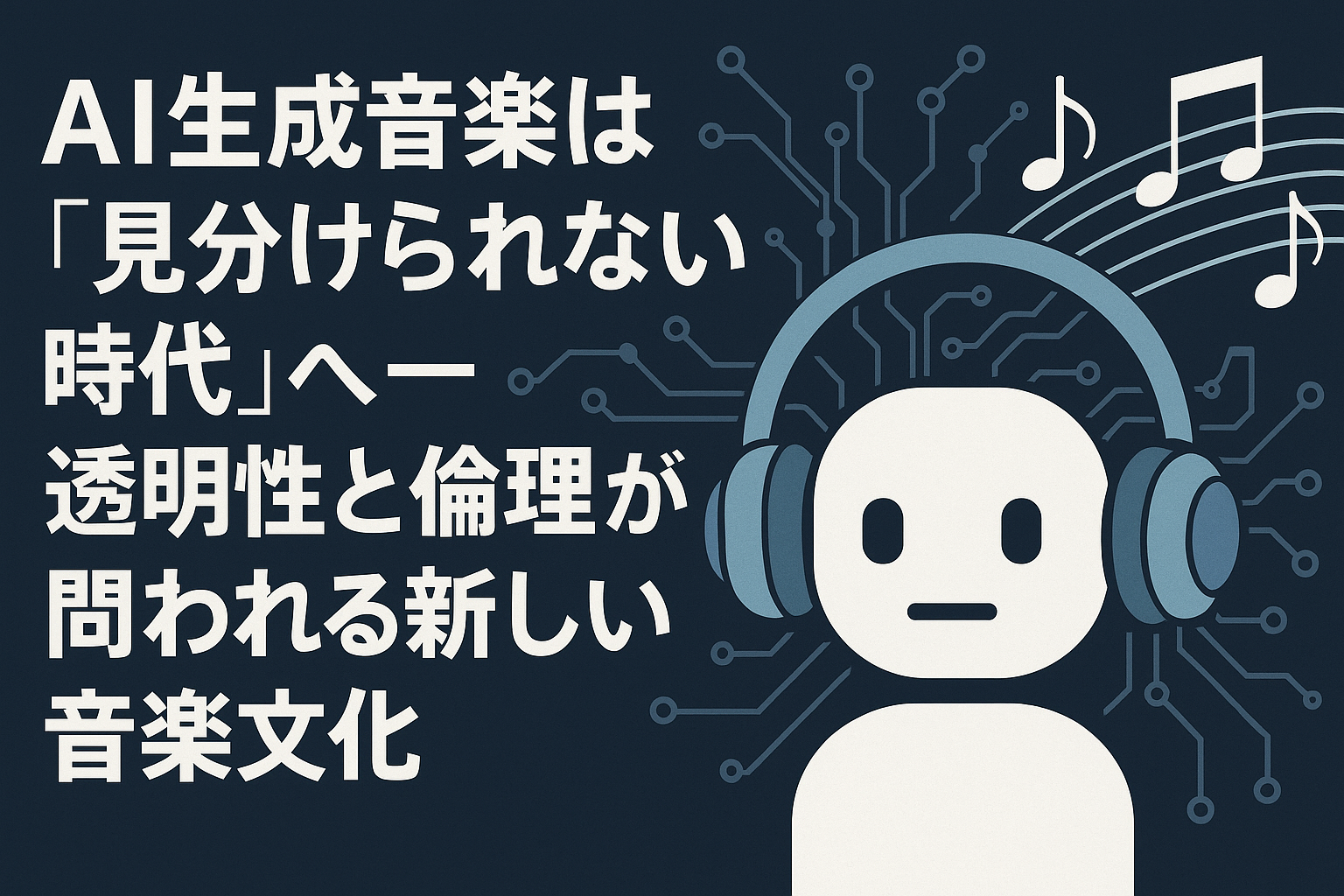
As AI-generated content continues to surge, a culture has emerged in which we try to determine whether new creations are “made by AI.” However, the latest survey results announced by Deezer challenge that very premise. The findings reveal a reality in which many people can hardly distinguish AI-generated music from human-made music.
In the survey, participants listened to a set of three tracks—two generated by AI and one created by a human—and astonishingly, 97% answered incorrectly. In other words, AI music has advanced to a level where most people can no longer trust their own ears.
What is particularly interesting is that while 66% of respondents listen to AI music out of curiosity, 45% say they want such music excluded from platforms. Acceptance and rejection coexist, reflecting the mixed emotions people have toward AI-generated music. Additionally, 80% believe that AI-generated content should be clearly labeled, highlighting a strong shared desire for transparency.
There is also widespread concern that AI-generated music could threaten musicians’ livelihoods. More than 70% believe it is unethical for AI to be trained on copyrighted works without explicit permission. The way AI produces music by drawing on existing creative works often conflicts with traditional rights frameworks, making this an issue the industry can no longer avoid.
What becomes clear from the survey is that AI-generated music has already reached a stage where it competes on quality, and that this shift demands three key principles: transparency, ethics, and fairness. In the realm of music culture, questions remain—what should be considered “human creativity,” and how will AI complement or encroach upon the work of artists? The answers are still uncertain.
However, one thing is certain: for AI and music to coexist, we need rules that allow consumers to enjoy music with confidence, and systems that ensure artists receive proper recognition. As AI-generated music continues to grow, platforms, companies, and each of us as listeners must consider how to confront and navigate this issue.