
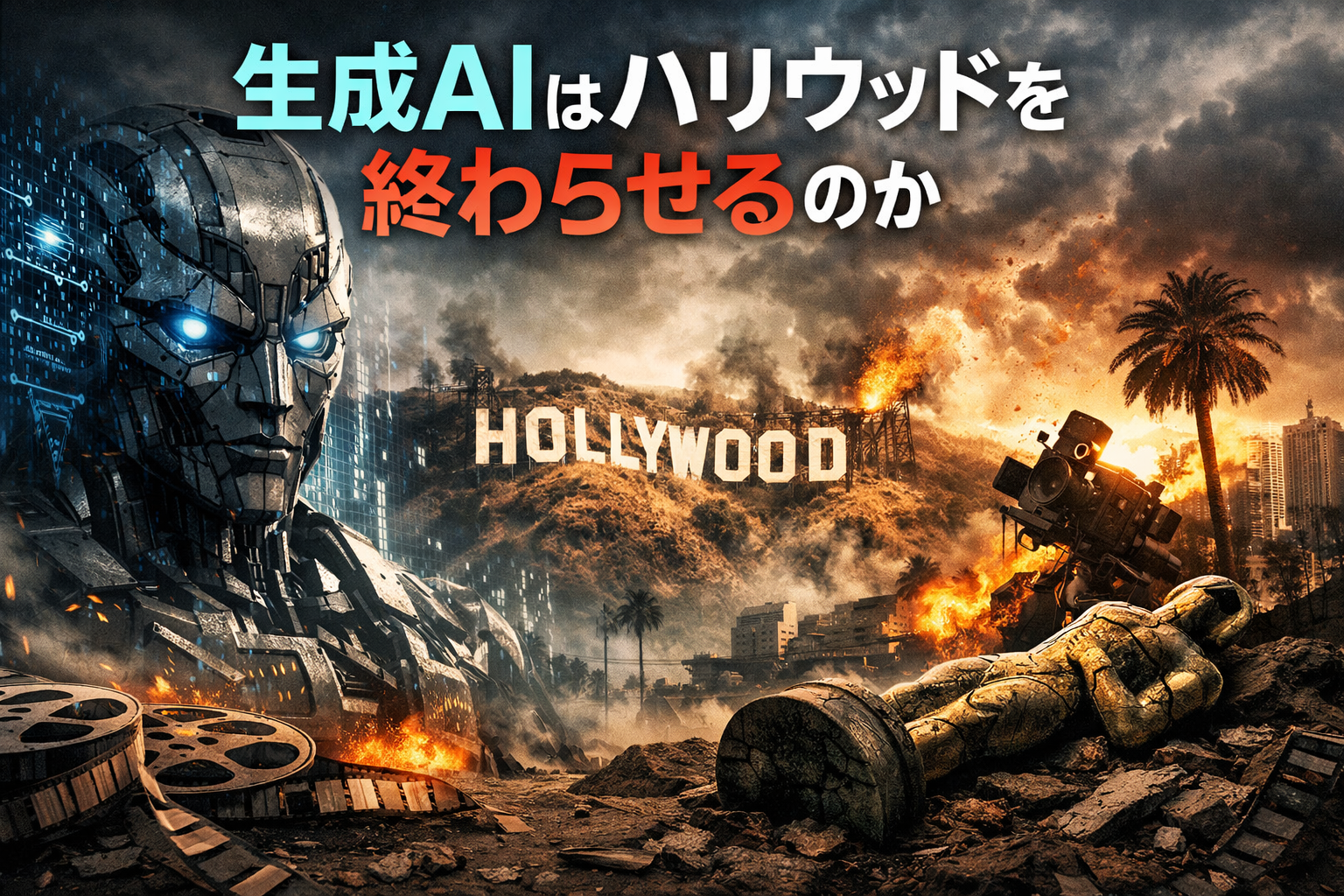
The newly released video-generating AI, “Seedance 2.0,” developed by China’s ByteDance, has prompted strong concern within the American film industry. Charles Rivkin, Chairman and CEO of the Motion Picture Association (MPA), has called on the company to immediately cease what he alleges to be large-scale unauthorized use of copyrighted U.S. works.
On social media, videos purportedly generated from just a few lines of prompts—such as footage depicting Tom Cruise and Brad Pitt engaged in combat—have gone viral. The ease with which imagery evoking well-known actors and established cinematic universes can be created has heightened alarm across Hollywood.
This issue is not merely about technological innovation. It raises fundamental questions that could destabilize the very foundation of copyright law.
Why the Film Industry Is Strongly Opposing It
The film industry is sustained by massive production budgets and the collaboration of vast numbers of professionals. Screenwriters, directors, actors, cinematographers, editors, VFX artists, distributors, and many others—millions of jobs in total—are supported by the copyright system. Rivkin has made clear his concern that AI services disregarding copyright law could erode this industrial foundation.
At the core of the controversy are two principal issues:
First, the possibility that existing copyrighted works were used as training data for the AI. If such training occurred without authorization, it may constitute infringement of the reproduction right.
Second, the issue of substantial similarity in the AI-generated outputs. If generated content evokes the likeness or distinctive character traits of specific actors, this could raise not only copyright concerns but also issues related to the right of publicity and unfair competition law.
If the similarity goes beyond merely “resembling” and is deemed “substantially identical,” the likelihood of legal liability increases significantly.
The Reality That Technological Progress Cannot Be Halted
At the same time, deeper anxieties are spreading within creative communities. Screenwriter Rhett Reese’s remark, “We’re finished,” symbolizes a more existential fear.
Generative AI has the potential to dramatically reduce production costs. If high-quality video production becomes possible at the individual level, the traditional model of filmmaking could face a major turning point. It is no longer inconceivable that a talented individual could produce a feature-length film using AI tools.
However, a sober perspective is necessary. Even as technology advances, the essence of creative work—narrative structure, direction, emotional pacing, and insight into audience psychology—remains dependent on human capability. AI may be a powerful instrument, but it cannot unequivocally be regarded as the creative agent itself.
The real issue is how the “democratization of creation” can coexist with the protection of existing rights.
Legal Battles Already Underway
Litigation concerning generative AI is already a reality. In June 2025, Walt Disney and NBCUniversal filed lawsuits against an image-generating AI service, alleging copyright infringement. Seedance 2.0 is likely to face similar legal risks.
The key issues moving forward can be summarized in three points:
- The legality of using copyrighted works during the training phase
- Clarification of the standards for assessing substantial similarity in generated outputs
- The scope of liability borne by AI service providers (direct infringement or contributory infringement)
In particular, the extent to which service providers are obligated to implement preventive measures will be critical in shaping future judicial precedent.
Regulation or Coexistence?
It remains unclear whether ByteDance will voluntarily strengthen its restrictions or choose to contest the matter in court. In any event, the conflict between generative AI and copyright law is not a temporary phenomenon.
Copyright law exists to ensure incentives for creators. Technological innovation, on the other hand, generates social benefits. The core policy challenge lies in reconciling these two values.
It is crucial to avoid reducing the debate to a simplistic “AI versus creators” narrative. Rather than excluding generative AI, the focus should be on institutional design—ensuring transparent management of training data, appropriate compensation for rights holders, and traceability of generated outputs.
Not an End, but a Turning Point
To the question, “Will Hollywood end?” the more likely answer is: it will not end, but it will change.
Seedance 2.0 represents both a threat and a new production tool for the film industry. History shows that technological innovations—the advent of sound film, the evolution of CGI, the rise of streaming—have consistently disrupted established structures.
The current generative AI issue lies on that same continuum. However, it is more consequential than previous shifts because it directly implicates the core architecture of copyright law.
Future judicial decisions and legislative developments will shape the future of creative industries. Generative AI may not bring about the end of filmmaking, but it could act as a catalyst for redefining industrial structures and systems of rights protection.
The debate surrounding Seedance 2.0 stands at the forefront of this transformation.