
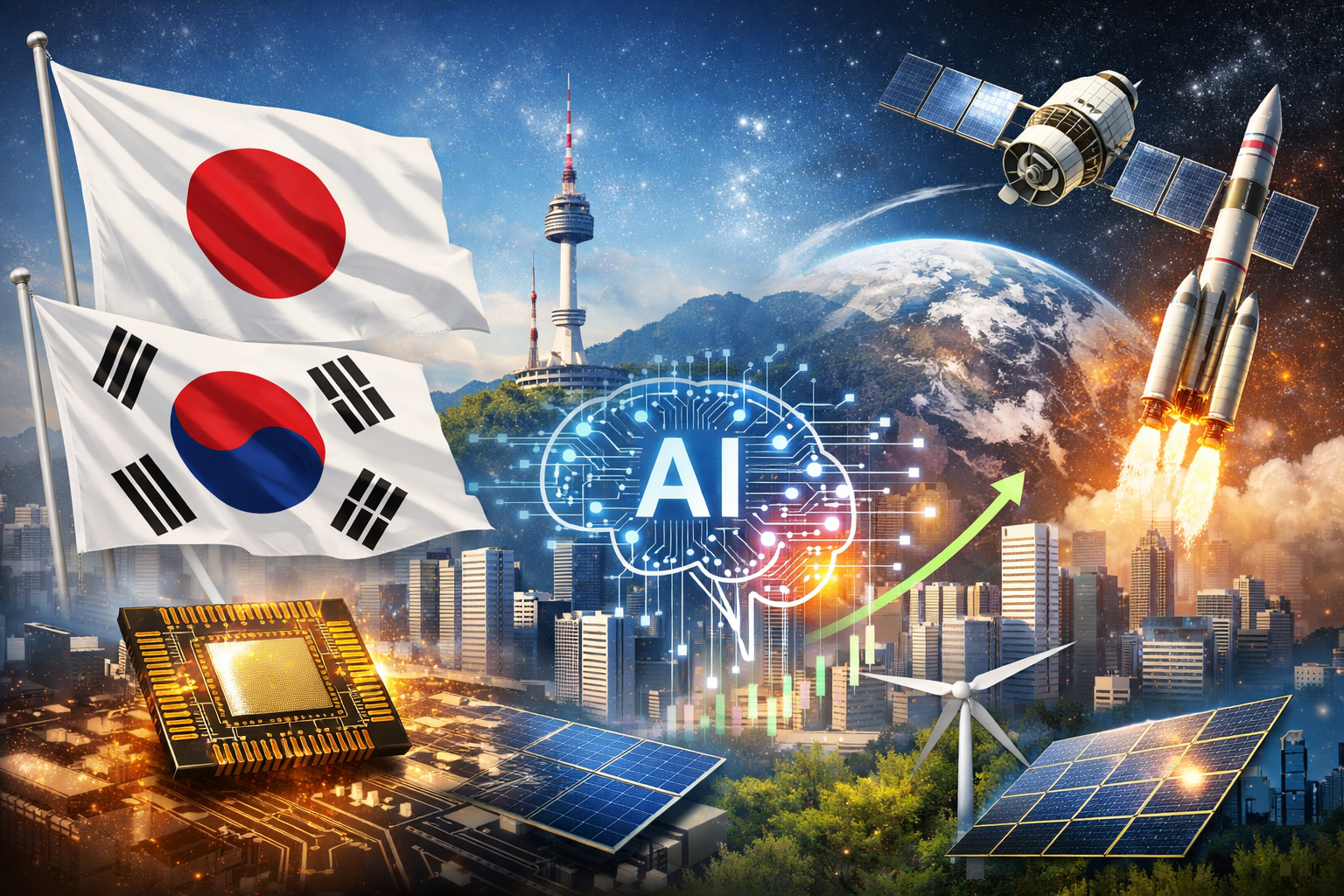
On March 3, 2026, the 17th Japan–Korea High-Level Economic Dialogue was held in Seoul. Park Jong-han, Deputy Minister for Economic Affairs at the Ministry of Foreign Affairs of the Republic of Korea, and Akahori Takeshi, Senior Deputy Minister for Foreign Affairs of Japan, attended as the chief representatives. During the meeting, the two sides held wide-ranging discussions on the economic policies of both countries and the future direction of bilateral cooperation.
Against the backdrop of global supply chain disruptions and rising geopolitical risks, the dialogue confirmed the strengthening of cooperation centered on economic security. In addition, the participants shared the status of cooperation in a wide range of fields, including advanced technologies such as artificial intelligence (AI), space, and biotechnology, as well as environment and energy, agriculture, livestock and fisheries, people-to-people exchanges, and intellectual property protection. They also exchanged views on future development strategies in these areas.
The two sides also agreed to expand cooperation within multilateral frameworks such as the WTO, G20, APEC, and RCEP in order to maintain the free trade system and strengthen a rules-based economic order.
An Era in Which Economic Security Takes Center Stage
One of the most notable aspects of this dialogue was that “economic security” was placed at the center of the discussions. In recent years, international competition surrounding semiconductors, critical minerals, and advanced technologies has intensified, and ensuring stable supply chains has become a key pillar of national strategies.
In this context, Japan and South Korea are strengthening their role not merely as trading partners but as partners that jointly support the stability of technological and industrial foundations. In particular, fields such as AI, space, and biotechnology are directly linked to national competitiveness and are closely connected to the industrial policies and research and development strategies of both countries.
Both Japan and South Korea possess technological strengths in different areas, and deeper cooperation could create mutually complementary benefits. The dialogue can therefore be seen as an effort to reorganize such technological cooperation within the broader framework of economic security.
The Impact of the Revival of “Shuttle Diplomacy”
The Korean side explained that the dialogue took place against the backdrop of the “complete restoration of shuttle diplomacy,” which enabled more in-depth discussions toward comprehensive economic cooperation.
Japan–Korea relations have experienced periods of tension in recent years due to political and historical issues. However, the resumption of summit-level visits and the revitalization of diplomatic dialogue have recently created momentum for improving bilateral relations.
When diplomatic relations become stable, economic cooperation tends to proceed in a more institutionalized and long-term manner. The current economic dialogue can be seen as a concrete example of how these improvements in the diplomatic environment are being reflected in policy-level discussions.
The Significance of Cooperation in Technology and Intellectual Property
Among the topics discussed were advanced technologies such as AI, space, and biotechnology, as well as intellectual property protection. This issue goes beyond industrial policy and is closely related to rule-making in an era defined by technological competition.
As technological development becomes more sophisticated, the management of patents and intellectual property becomes an increasingly important factor influencing international competitiveness. In particular, in fields such as AI and biotechnology, the protection of research outcomes and the establishment of international standards have become major issues.
In this sense, the inclusion of intellectual property cooperation as a topic of discussion can be interpreted as an indication that Japan and South Korea intend not only to pursue industrial cooperation but also to take part in shaping the rules governing advanced technologies.
Cooperation within Multilateral Frameworks
The dialogue also confirmed strengthened cooperation within multilateral frameworks such as the WTO, G20, APEC, and RCEP. This highlights that Japan–Korea relations play an important role not only in bilateral relations but also in maintaining the international economic order.
In recent years, the global economy has seen a growing trend toward protectionism and economic bloc formation. Under such circumstances, cooperation among major economies is essential to maintain a free trade system and a rules-based economic order.
Both Japan and South Korea have export-oriented economic structures, making the preservation of the free trade system a shared interest. Therefore, strengthening cooperation within multilateral frameworks can be considered a rational choice for both countries.
A New Phase in Japan–Korea Economic Relations
What emerges from this high-level economic dialogue is that Japan–Korea relations are shifting from a “trade-centered relationship” to one focused on technology and economic security.
In advanced technology fields such as AI, space, and biotechnology, a complex situation is emerging in which competition and cooperation among nations occur simultaneously. In such an environment, countries with similar values and economic structures are likely to deepen cooperation with one another.
For both Japan and South Korea, this dialogue can be viewed not merely as a routine meeting but as an indication of a new direction for cooperation in the era of economic security. Attention will now turn to how this dialogue may lead to concrete joint projects and institutional frameworks in the future.