
Introduction
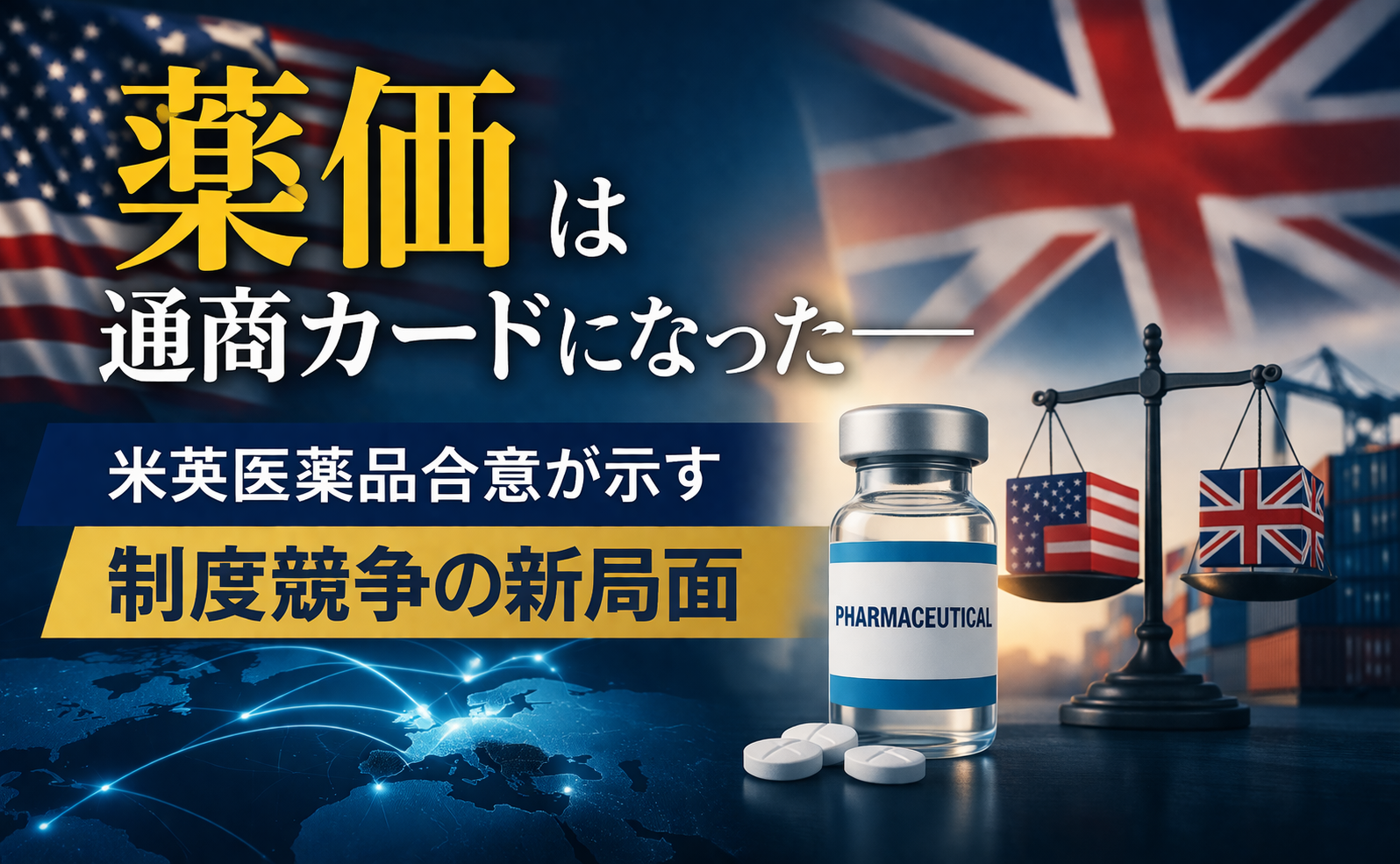
The U.S.-UK pharmaceutical pricing agreement announced on April 2, 2026, is not merely a measure to avoid tariffs. In this agreement, which formally documented the preliminary understanding reached in December 2025, the United Kingdom committed to increasing spending on new medicines from 0.3% of GDP to 0.6% by 2036, raising the prices paid by the National Health Service (NHS) for new medicines by 25% from April 2026, revising NICE’s QALY threshold to £25,000-£35,000, introducing and adopting EQ-5D, and capping the VPAG rebate rate at 15%. In return, the United States agreed not to impose additional tariffs on British pharmaceuticals and medical technologies under Sections 232 and 301 until January 19, 2029, subject to certain conditions.
The Core Meaning of This Agreement
The essence of this agreement lies not so much in the trade terms for pharmaceuticals themselves, but in the fact that the United Kingdom’s drug pricing system, cost-effectiveness assessment, and market access management were made subjects of trade negotiations. The document even stipulates that price increases must not be effectively offset by usage restrictions or additional rebates. This suggests that what the United States sought was not a symbolic concession, but institutional reform that would actually improve the profit environment for pharmaceutical companies.
What the United Kingdom Gained
For the United Kingdom, the greatest achievement was a significant reduction in uncertainty surrounding exports to the United States. According to the published document, the United States will not impose Section 232 tariffs on British pharmaceuticals from January 1, 2026, through January 19, 2029, nor additional tariffs under Section 301 from December 1, 2025, through January 19, 2029. The same tariff relief during that period is also promised for medical technologies. In addition, the agreement includes the establishment of a pharmaceutical supply chain partnership and stronger cooperation toward mutual recognition of medical devices. It is therefore not simply a matter of “tariff exemption,” but a framework that deepens U.S.-UK life sciences cooperation at the institutional level.
What the United Kingdom Must Bear
At the same time, the price the United Kingdom must pay is far from small. Doubling spending on new medicines, raising NHS prices for new medicines by 25%, increasing the QALY threshold, and capping VPAG rebates may improve patient access and strengthen industrial competitiveness, but they also create new tensions for NHS finances and the independence of drug evaluation. In particular, the revision of NICE’s threshold must be taken seriously as a case in which trade pressure directly affected the long-standing British principle of allocating healthcare resources based on cost-effectiveness.
The United States’ Objective
The U.S. objective is clear. The Office of the United States Trade Representative (USTR) and the U.S. Department of Health and Human Services have consistently emphasized the message that the longstanding structure in which Americans pay high prices while other countries benefit from lower prices must be corrected. On the same day, President Trump issued an executive order that could impose additional tariffs of up to 100% on certain patented pharmaceuticals. This shows that tariffs are being used not only as trade policy, but also as a negotiating lever to force changes in foreign drug pricing systems. For the United Kingdom, a framework was presented under which the 10% tariff could eventually be reduced to zero, while the EU, Japan, South Korea, and Switzerland were set at 15%. It can be said that the United States has entered a phase in which it is attempting to reshape its domestic drug pricing problem from the outside through international negotiations.
Implications for Japan
This news matters for Japan because the issues at stake in international negotiations over pharmaceuticals are no longer limited to tariffs and intellectual property protection. Drug pricing, health technology assessment (HTA), access, rebates, and supply chains are beginning to be integrated into a single negotiating framework. Going forward, the question may no longer be only how cheaply each country purchases medicines, but also whether its institutional design is consistent with U.S. industrial and pricing policy. For pharmaceutical companies, market access strategy and trade risk management are becoming inseparable. For governments, it means that healthcare finance must now be understood as an issue that can be placed directly on the table in trade negotiations.
Conclusion
This U.S.-UK agreement is an event that shakes the conventional assumption that drug pricing is purely a matter of domestic policy. In exchange for tariff avoidance and greater stability in investment and supply chains, the United Kingdom accepted revisions to its drug pricing and evaluation systems. By combining the threat of high tariffs with a most-favored-nation-style framework, the United States demonstrated a method of pressing other countries to make concrete changes to their systems. The key point to watch from here is whether this model will remain a special case limited to the United Kingdom, or whether it will become a new trade standard in the pharmaceutical sector.