
Introduction
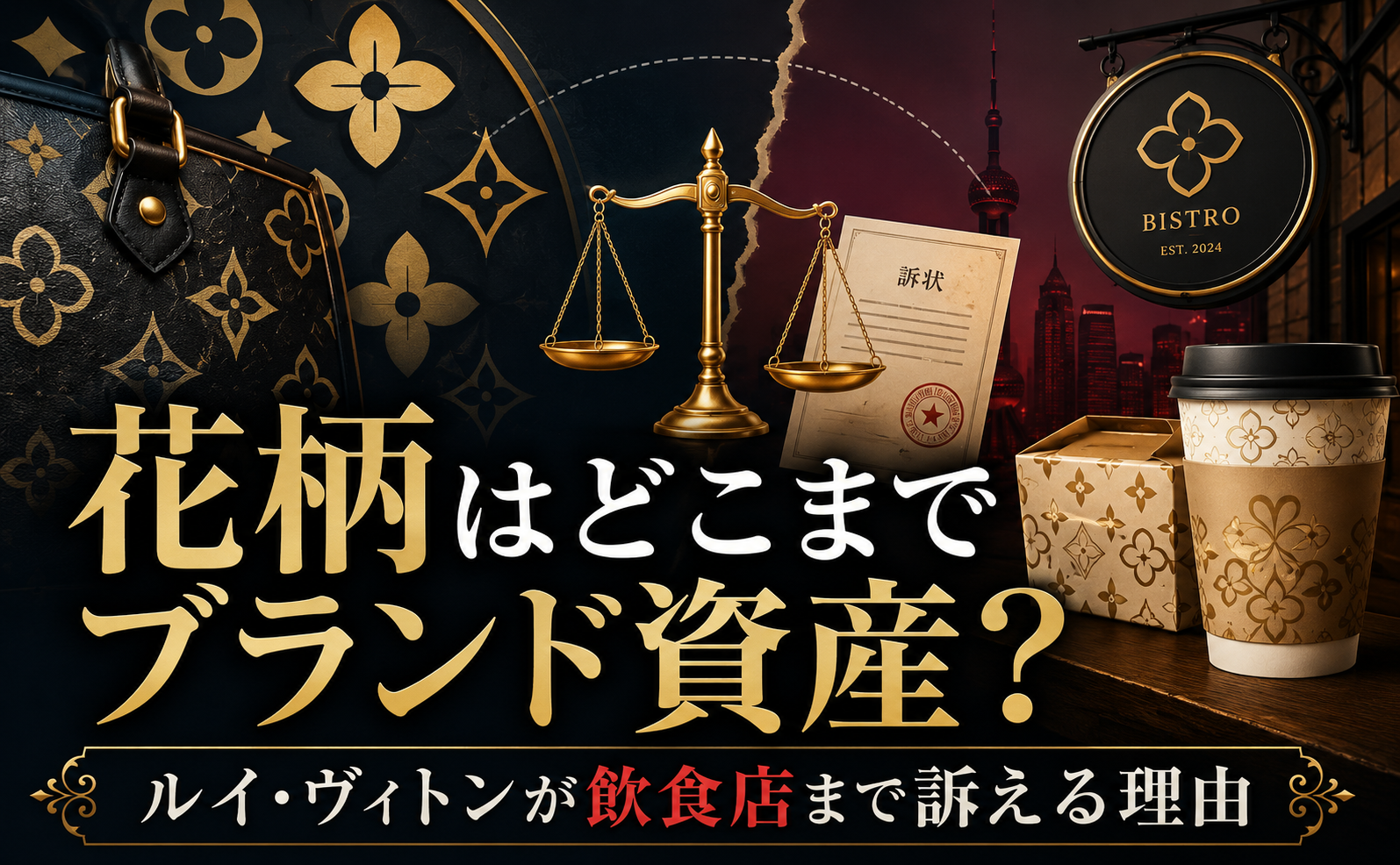
Louis Vuitton, the French luxury fashion brand, has attracted attention for reportedly filing a series of trademark infringement lawsuits in China against businesses in the food and beverage industry. One case that drew particular attention involved the Chinese tea beverage chain Moli Naibai. The dispute centered on allegations that Moli Naibai’s logo closely resembled the four-leaf-shaped flower motif included in Louis Vuitton’s iconic Monogram design. According to reports, the Suzhou Intermediate People’s Court found that Moli Naibai had infringed Louis Vuitton’s exclusive right to use its registered trademark. The total amount of damages and related compensation was reportedly 10.3 million yuan.
In addition, information about another lawsuit involving a restaurant in Nanjing also attracted public attention. Some speculation spread that the well-known Nanjing duck blood vermicelli soup restaurant Huiwei Duck Blood Vermicelli Soup had been sued, but the restaurant denied this on social media. Reports have also explained that the actual issue concerned flower patterns used in the interior design and packaging of a restaurant bar that had already closed.
At first glance, a “luxury bag brand” and a “milk tea shop” or “duck blood vermicelli soup restaurant” may appear to belong to completely different industries. However, this development shows that modern brand protection can no longer be understood simply in terms of how close the product fields are.
The Issue Is Not Whether Bags and Restaurants Compete
The important point in this news is not whether Louis Vuitton is making a serious entry into the food and beverage industry. The core issue is how strongly Louis Vuitton’s flower-pattern design makes consumers think of “Louis Vuitton-ness.”
A trademark is originally intended to identify the source of goods or services. For example, if consumers see a logo and recognize it as indicating the products of a particular company, that logo has strong distinctiveness. Louis Vuitton’s Monogram is not merely decoration on bags and wallets. Through many years of use, it has become a visual symbol representing the brand itself.
For that reason, even if the other party is not a fashion brand but a restaurant, Louis Vuitton would find it difficult to ignore the use of a similar flower pattern on store logos, interior designs, containers, packaging, advertisements, and similar materials. The issue is not only whether consumers actually mistake the business for a Louis Vuitton store. The very spread of associations such as “somehow luxury-brand-like” or “LV-like” can lead to dilution of brand value.
Why “Famous Brand-Like” Designs Are Dangerous
For restaurants and emerging brands, designs reminiscent of famous brands can have a strong short-term customer-attraction effect. They can instantly create a sense of luxury, sophistication, and topicality. Especially in the age of social media, the appearance of logos, store interiors, cups, paper bags, menus, and other visual elements has become a marketing factor almost as important as the product itself.
However, if that appearance comes too close to another company’s famous trademark or well-known design, what was supposed to be a shortcut to brand-building instead becomes a legal risk. In the case of Moli Naibai, a key point appears to have been that the design was not merely a small decorative element used by a single store, but was used as the logo of a chain brand. A logo is the face of a brand, and because it is used continuously and repeatedly, the impact is also significant if it is found to infringe another party’s rights.
In the food and beverage industry in particular, awareness of trademark, design, and copyright clearance tends to be lower than in the fashion industry. Store design and packaging design are sometimes treated as matters of “creating atmosphere,” and businesses may refer to the image of famous brands. However, borrowing the worldview of a brand and coming close to another company’s source-identifying sign are separate issues. The latter can develop into a serious dispute even when the industries are different.
Louis Vuitton’s Aim Is Not “Excessive Defense” but “Boundary Management”
Regarding these lawsuits, some reactions on Chinese social media reportedly include comments such as “four-leaf shapes and flower patterns have existed for a long time” and “isn’t it excessive for a luxury brand to sue even restaurants?” It is true that motifs such as flowers, stars, circles, and four-leaf shapes cannot be monopolized by any single company.
However, what trademark law protects is not the abstract idea of a “flower” itself. It protects the specific composition of a figure, the arrangement, the treatment of lines, the manner of use, and the brand distinctiveness acquired through long-term use. In other words, the issue is not that “all flower patterns are prohibited.” The issue is whether a specific expression of a flower pattern that calls to mind a famous brand may be used commercially.
From Louis Vuitton’s perspective, if it fails to enforce its rights here, similar flower patterns may spread into food and beverage services, retail, interior design, miscellaneous goods, advertising, and other fields, gradually weakening the rarity and distinctiveness of the Monogram. For famous brands, trademark management is not simply about excluding counterfeit goods. It is also about continuously showing the market the visual boundaries of the brand.
Changes in Intellectual Property Protection in the Chinese Market
This news can also be viewed as part of a broader change in intellectual property protection in the Chinese market. In the past, China had a strong image among overseas brands as a market with many counterfeit goods and trademark disputes. In recent years, however, Chinese companies themselves have entered a stage in which they are increasing their own brand value, making the protection of trademarks and designs increasingly important.
In such a market environment, active rights enforcement by international brands in China is not merely a hardline stance by foreign brands. It is also related to the formation of brand order within China. The extent to which courts protect the figurative trademarks of famous brands sends an important signal to Chinese companies as well.
At the same time, famous brands also face challenges. Strong rights enforcement is effective for brand protection, but if it appears excessive, it may provoke consumer backlash. Especially when the other party is a small local restaurant or a popular, everyday establishment, it can create the impression that a giant brand is attacking a weaker party. The balance between protecting trademark rights and responding to public opinion will become increasingly important.
What Food and Beverage Brands Should Learn
The lesson food and beverage brands should learn from this case is clear. Logos and store designs are not mere decorations; they are business assets that carry intellectual property risks.
Emerging brands in particular tend to undervalue trademark searches and design-rights clearance when opening a business or rebranding. However, if a brand is forced to change its logo after it has grown, the impact extends to signage, packaging, store interiors, advertising materials, social media accounts, franchise development, and many other areas. Neglecting design checks at the initial stage can lead to major costs in the future.
Moreover, having consumers talk about how a design “resembles a famous brand” may seem attractive from a marketing perspective. However, that buzz can also give the trademark owner an opportunity to discover infringement. In an age when things spread quickly on social media, imitative designs do not remain hidden. Rather, the more they spread, the greater the legal risk becomes.
In the Age of Branding, the Fight Is Over “Signs” More Than “Products”
Louis Vuitton’s recent actions show that the center of brand competition is shifting from products themselves to visual signs. Not only products such as bags, wallets, and clothing, but also logos, patterns, colors, store spaces, packaging, and the photogenic worldview of a brand itself now constitute brand value.
In that sense, these lawsuits are not simply “strange cases in which a luxury brand sued milk tea shops or soup restaurants.” Rather, they are symbolic of an era in which the signifying power of a brand has come to possess value across industries.
Going forward, in industries related to the broader lifestyle sphere, including food, beverages, cafés, hotels, miscellaneous goods, and cosmetics, maintaining an appropriate distance from famous brands in other sectors will become increasingly important. Creating a distinctive worldview for one’s own brand is important. However, if that worldview appears to depend on another company’s brand assets, it can become a major obstacle during the brand’s growth.
Conclusion
Louis Vuitton’s series of trademark infringement lawsuits in China is not merely an example of aggressive rights enforcement by a luxury brand. It is a case that shows how far modern brand protection has expanded.
Flower patterns and four-leaf motifs are, in themselves, widely used and common design elements. However, when they are commercially used in a form that calls to mind a specific famous brand, trademark issues may arise even if the industry is different. This news shows that while brand value is spreading beyond product categories, the boundary between freedom of design and trademark protection is becoming more delicate.
What companies will need going forward is not to borrow a sense of luxury that people have seen somewhere before, but to cultivate designs that possess distinctiveness unique to their own brand. Precisely because brands are becoming stronger, companies need to think not in terms of using the shadow of another company’s brand, but in terms of designing their own signs as long-term assets.