
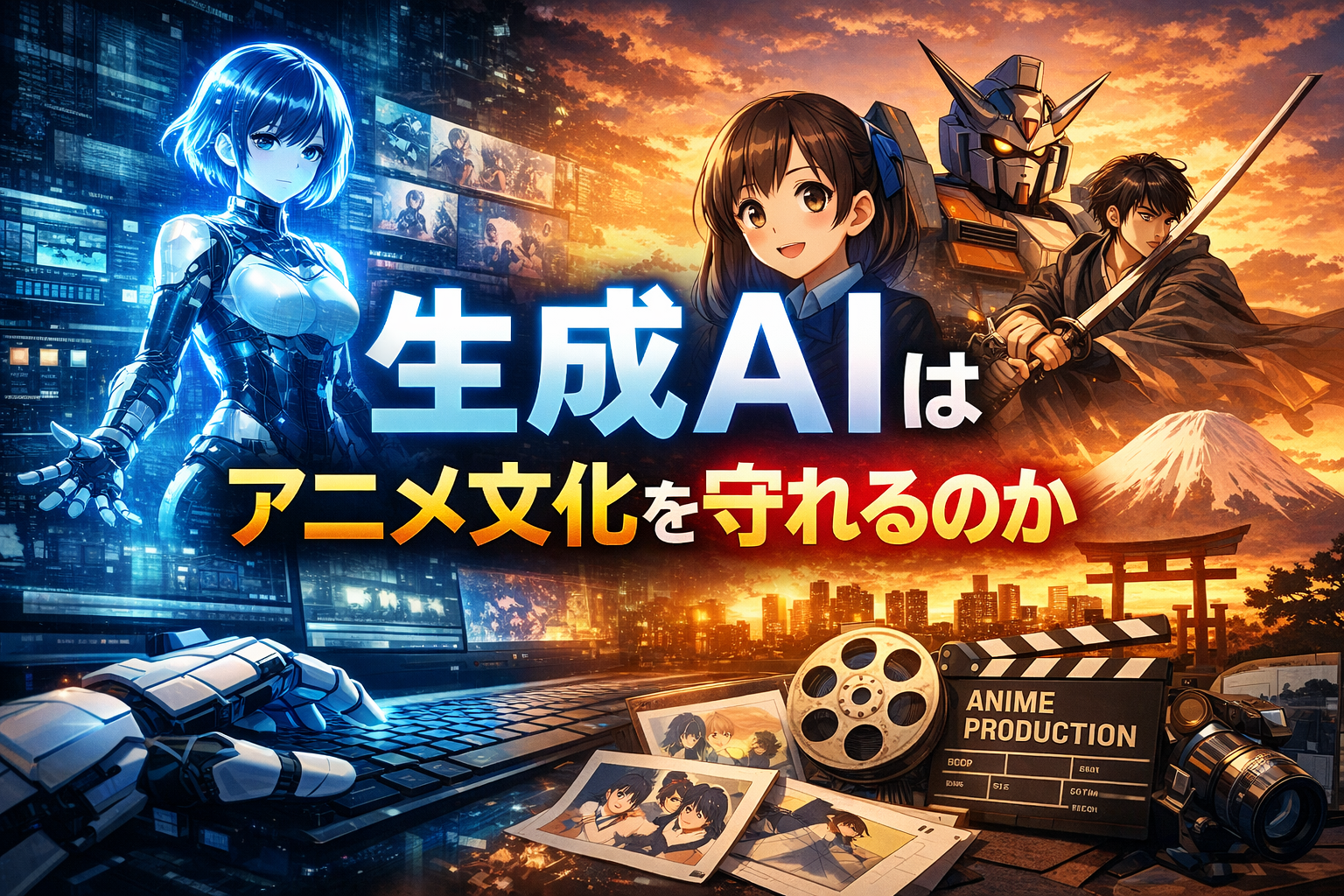
It has come to light that the Japan Anime Film Culture Federation (NAFCA) has inquired with TikTok Japan regarding issues surrounding the video generation AI “Seedance 2.0,” developed by China’s ByteDance. The response stated that the model was a pre-release version and that corrective measures were being implemented promptly. However, the core issue extends beyond mere shortcomings of a beta release.
This case brings into focus broader themes: generative AI and copyright, as well as the sustainability of the content industry.
What Is Seedance 2.0?
“Seedance 2.0” is a video generation AI model developed by the Chinese technology giant ByteDance. Known as the company that operates TikTok, ByteDance released the beta version of this advanced model, which can generate videos of up to 15 seconds by combining text, images, and audio inputs.
While the model’s natural visuals and cinematic quality have drawn attention on social media, numerous generated videos suspected of using Japanese anime, Hollywood films, and Disney works without authorization have been posted, prompting growing international criticism.
In Japan, NAFCA—an organization advocating for the sustainable development of the anime industry—raised concerns and formally contacted TikTok Japan. Notably, NAFCA also received a donation from TikTok Japan in 2024, creating a complex relationship that involves both “industry support” and “concerns over copyright infringement.”
Structural Conflict Between Technological Innovation and Copyright
The evolution of video generation AI has been remarkable. Similar debates arose in 2025 when OpenAI released Sora 2. As generated video has reached a level nearly indistinguishable from authentic footage, tensions with copyright holders have intensified rapidly.
The structure of the issue can be divided into two primary layers:
First is the “training phase” issue: to what extent can existing content be used for AI training?
Second is the “generated output” issue: to what extent is it permissible to reproduce visuals or characters that evoke specific copyrighted works?
Video generation AI, in particular, poses heightened concerns compared to still-image generation. Its ability to replicate artistic style, direction, and narrative atmosphere makes it easier to imitate creative works, raising questions not only about economic rights but also about creators’ moral rights.
International Repercussions and Policy Trends
This issue is not limited to Japan. In the United States, it has been reported that Disney and Paramount have sent cease-and-desist letters to ByteDance. At the governmental level, concerns have also been expressed. In Japan, Minister of State for AI Strategy Kimie Onoda stated that the matter “cannot be overlooked,” signaling an intention to swiftly assess the situation.
Because generative AI operates across borders, regulatory frameworks must achieve international coherence. However, copyright systems and interpretations of fair use differ among countries, making unified rule-making highly challenging.
The Perspective of Sustainability in the Anime Industry
NAFCA emphasizes the “sustainability of production environments.” Japan’s anime industry, while facing chronic issues such as overwork and low wages, remains a sector with significant global cultural influence.
If AI systems routinely absorb the value of creative works without authorization and mass-produce derivative content, incentives to invest in original works and animation production could weaken. This risk extends beyond copyright infringement to a potential restructuring of the industry itself.
At the same time, generative AI also holds potential as a tool for production support and creative expansion. The issue is not a binary choice between outright rejection and unconditional acceptance. The essential question is: under what regulatory framework should such technologies be utilized?
Key Issues Going Forward
Three major focal points can be identified:
- Ensuring transparency by generative AI companies (disclosure of training data and clarification of rights management)
- Establishing comprehensive licensing models with rights holders
- Developing governmental regulatory systems and promoting international cooperation
This is not a matter that can be resolved simply through content removal. Video generation AI will continue to advance, approaching a world where generated content becomes technically indistinguishable from reality.
At that point, what should we protect, and what should we permit?
The Seedance 2.0 controversy signals that we have reached a stage where a serious coexistence model between generative AI and creators must be designed.
Technological innovation cannot be halted. Yet innovation should not proceed at the cost of undermining cultural foundations.
There is an urgent need to establish rules that enable creative work and AI to move toward coexistence rather than confrontation.