
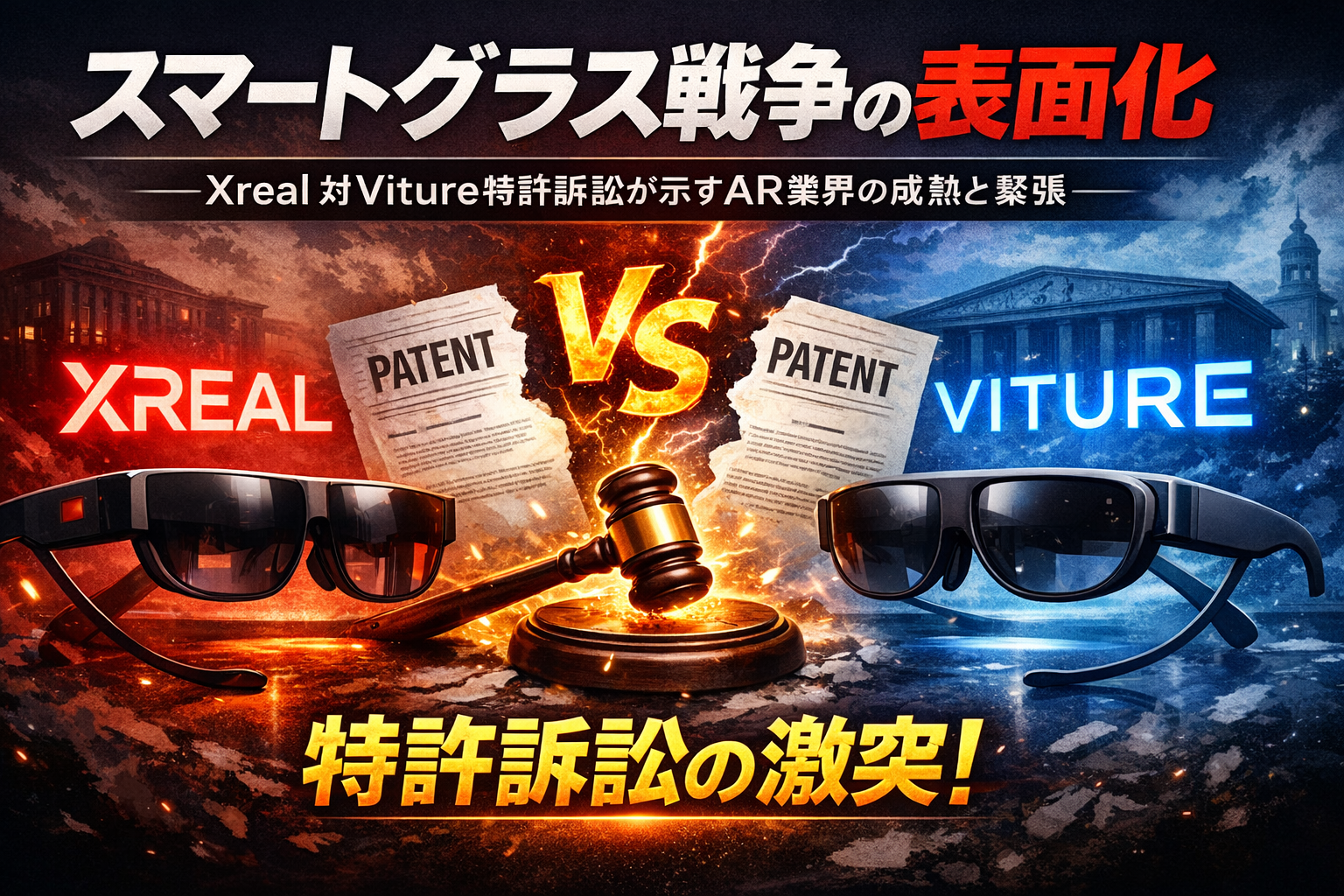
The news that Xreal, a China-born smart glasses company, has filed a patent infringement lawsuit in the United States against industry peer Viture can be seen as a symbolic event marking the AR (augmented reality) industry’s entry into a new phase. In the smart glasses sector, long regarded as still in a growth stage, a full-scale courtroom battle over technology and intellectual property has finally come into the open.
Why a Patent Lawsuit Now?
In this lawsuit, Xreal claims that patented technologies it has built through years of research, development, and investment have been unlawfully incorporated into Viture’s products. The models in question are high-end offerings such as the Luma Pro, Luma Ultra, and “The Beast.”
Both companies develop AR glasses designed to be connected to smartphones and laptops, promoting the experience of large virtual displays. As a result, similarities in specifications such as resolution and field of view may seem natural. However, the core issue in dispute is precisely where the line lies between “industry standards” and “infringement of patented technology.”
The Meaning Behind the Numbers: 800 vs. 70
In its statement, Xreal emphasizes that it holds more than 800 patents and patent applications worldwide, whereas Viture holds around 70 and reportedly none in the United States or Europe. These figures are presented not merely as a show of strength, but as evidence of who has exercised technological leadership in this field.
While patents are not valued solely by quantity, in a domain like AR glasses—where hardware and software are tightly intertwined—a broad patent portfolio can significantly influence both negotiating leverage and defensive strength.
A War of Nerves on the Eve of Apple’s Entry
Another reason this lawsuit has drawn attention is the expectation that Apple will enter the AR eyewear market. It is, in a sense, a rational move for existing players to clarify the boundaries of their intellectual property before a major industry heavyweight fully joins the competition.
As Bloomberg has pointed out, this legal battle has erupted just before market expansion, and can be seen as a preliminary skirmish that may shape the future competitive landscape.
Market Share and the Reality of “No Clear Winner”
According to research firm IDC, Xreal holds a larger share of the AR eyewear market than Viture. However, in terms of penetration among general consumers, Meta Platforms—offering smart glasses under the Ray-Ban brand—is currently one step ahead.
In other words, there is still no “absolute winner” in this field, and technology, branding, and intellectual property all remain key axes of competition.
Litigation to Protect a Collaborative Ecosystem
In recent years, Xreal has announced a collaboration model with ASUSTeK Computer and has also extended its partnership with Google. Its stated aim of “protecting an environment in which partners can collaborate with confidence” can be read not merely as an attempt to exclude competitors, but as a message about maintaining the credibility of the entire ecosystem.
What This Lawsuit Ultimately Indicates
This case is not simply a dispute between Xreal and Viture. It signals that smart glasses—and the AR industry as a whole—are transitioning from an experimental phase to that of a full-fledged industry.
As technology matures, friction over the boundaries of intellectual property inevitably increases. This case may represent an unavoidable milestone on the path to the AR industry’s next stage of growth.
Going forward, attention will focus not only on the outcome of the lawsuit, but also on the moves of major players such as Apple and on how patent strategies across the industry evolve. It can be said that smart glasses have entered an era in which not only technological competition, but intellectual property strategy itself, determines value.