
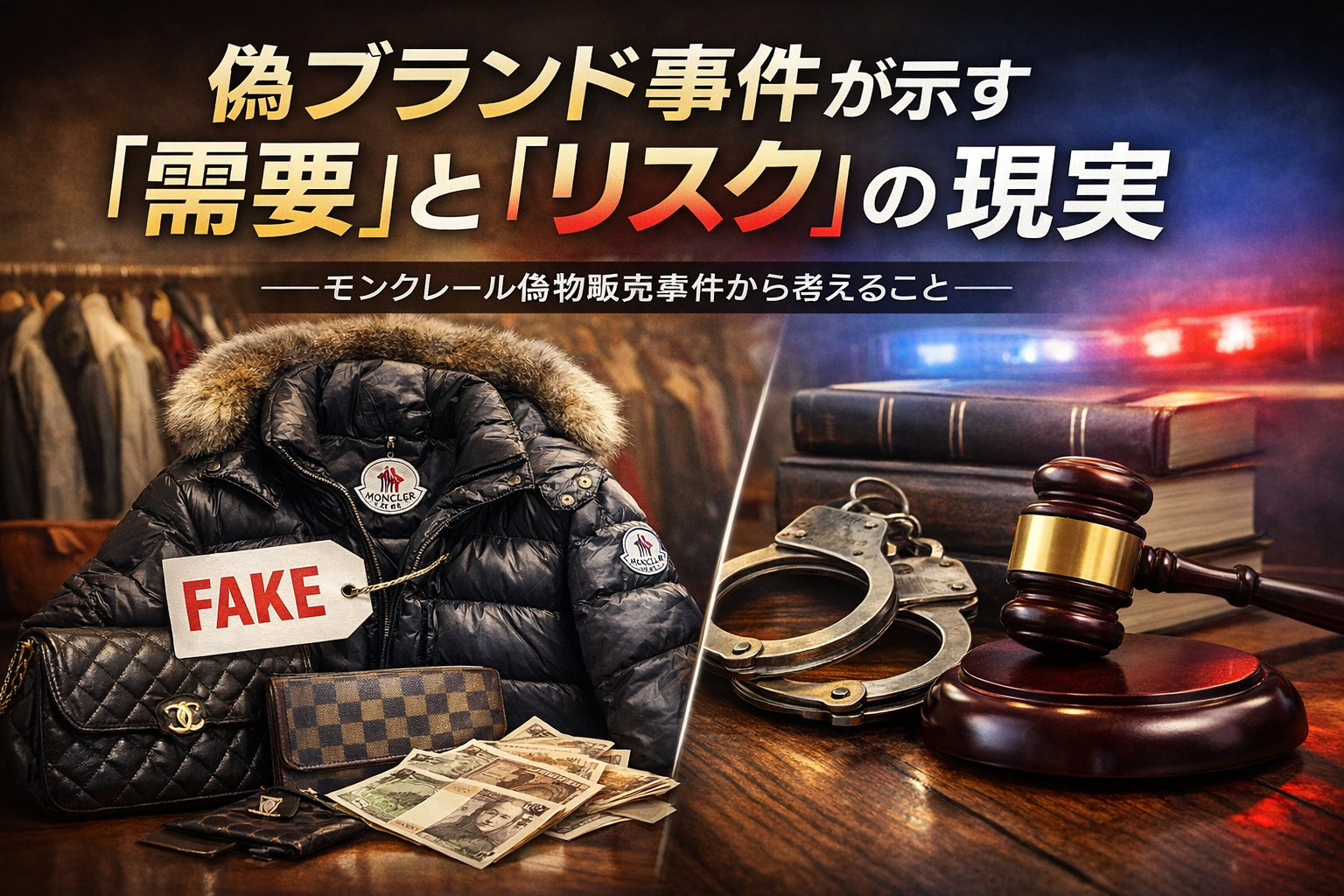
News has been reported that the owner of a variety goods shop in Osaka was arrested for allegedly selling counterfeit down jackets of the luxury brand Moncler. During a police search of the premises, more than 300 counterfeit branded items were seized, and the shop is believed to have generated monthly sales of approximately 2.5 million yen. The suspect has reportedly admitted that all of the logo-bearing products he sold were counterfeit.
This incident goes beyond a simple case of “cracking down on counterfeit sales” and offers many insights into modern consumer behavior, brand value, and legal risk.
Why Counterfeit Brands Do Not Disappear
What first gives us pause is the reality that demand for counterfeit branded goods still exists. Luxury brands such as Moncler offer not only quality and design, but also intangible values such as “status” and “trust.” However, their price ranges are not easily accessible for many consumers.
As a result, there remains a certain segment of consumers who think, “If it’s hard to tell from the real thing, the cheaper one is fine,” or “As long as I can enjoy the look and feel, that’s enough.” This sustains the counterfeit market. The fact that the shop in question was said to earn a substantial amount in monthly sales clearly illustrates the scale of that demand.
The Significant Risks for Sellers
On the other hand, the risks borne by sellers are extremely serious. Trademark infringement is subject to criminal penalties, leading not only to arrest, searches, and seizure of goods, but also to the irreversible loss of social credibility.
In this case, the suspect stated that he “knew everything was counterfeit,” but even if he had claimed ignorance, it would be difficult to escape liability when selling such goods as a business. It is evident that this is conduct that jeopardizes one’s life and livelihood in exchange for short-term profit.
Consumers Are Not Uninvolved
This issue is not limited to sellers alone. Purchasing counterfeit branded goods ultimately encourages illegal activity and distorts the healthy functioning of the market. There are also risks associated with wearing products whose quality and safety are not guaranteed.
Behind the feeling of “getting a good deal cheaply” lies the possibility of being complicit in the infringement of others’ rights or criminal acts—an awareness that each consumer should bear in mind.
Brand Value and the Role of the Law
Luxury brands command high prices not only because of their materials and manufacturing processes, but also because of the trust and brand image built up over many years. Trademark law exists to protect that value and plays an essential role in maintaining fairness in the marketplace.
This incident once again demonstrates how easily brand value can be targeted, and how indispensable legal deterrence is.
Conclusion
News about counterfeit brand cases often ends with a one-sided understanding that “a malicious seller was caught.” However, behind such incidents lie complex factors such as consumer psychology, economic disparity, and perceptions of brand value.
Taking this case as an opportunity to pause and reconsider our own “purchasing decisions” and “relationship with brands” may be the most constructive way to respond.