
Introduction
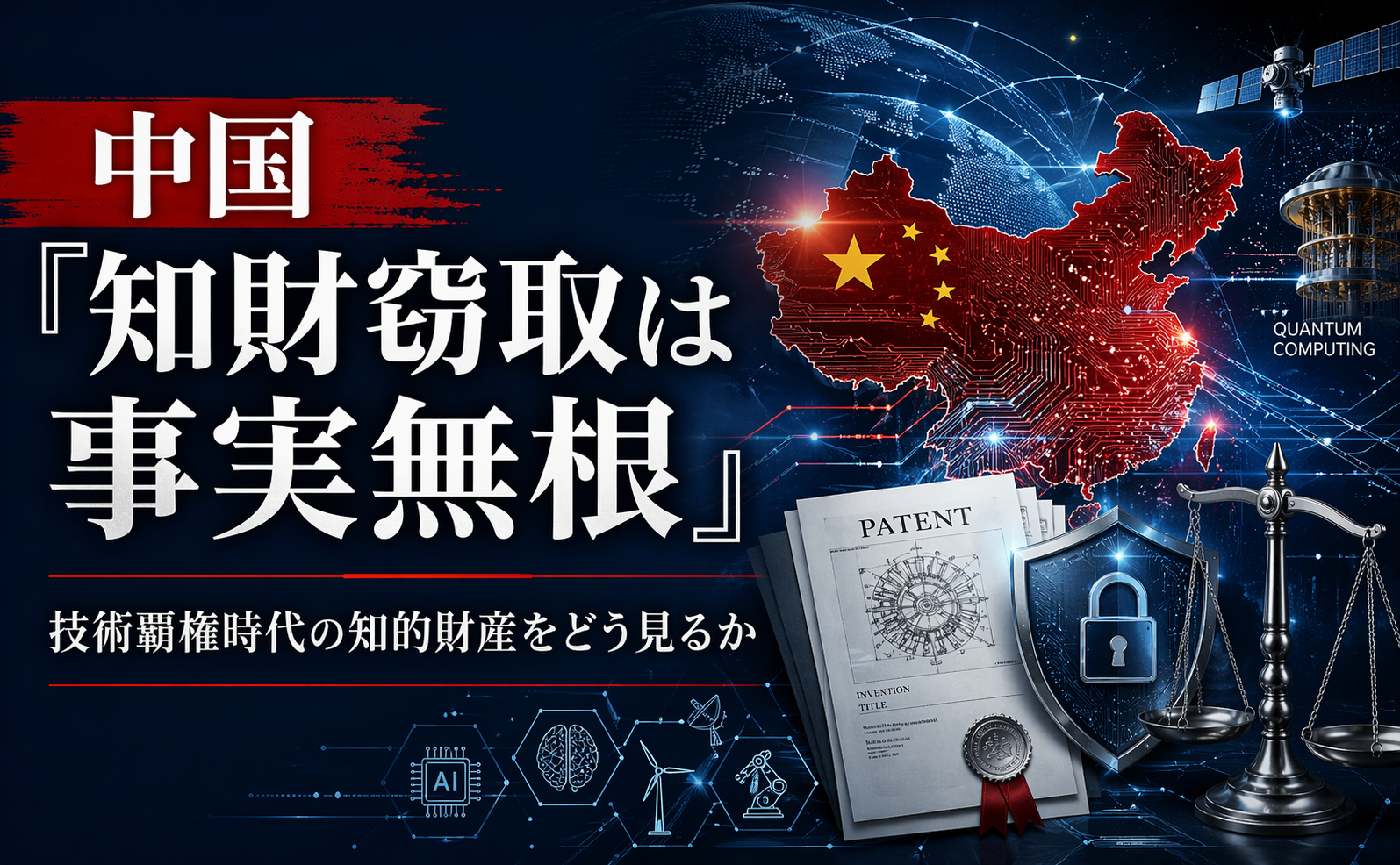
At a regular press conference held by China’s Ministry of Foreign Affairs on April 22, 2026, spokesperson Guo Jiakun stated that allegations of Chinese “intellectual property theft” are “entirely baseless.” At the briefing, against the backdrop of World Intellectual Property Day on April 26 and China’s Intellectual Property Publicity Week, a question was raised regarding the fact that, while China has achieved results in advanced fields such as artificial intelligence, quantum technology, and manned spaceflight in recent years, some countries continue to suspect China of infringing intellectual property rights and “stealing” advanced technologies, and have imposed various restrictive measures on that basis. In response, Guo emphasized that China is already one of the world’s leading powers in intellectual property and has ranked among the top countries in international patent filings for many years, arguing that China’s development is the result of its own efforts and mutually beneficial international cooperation.
This statement carries significance far beyond that of a simple rebuttal by a single country. That is because intellectual property issues today extend beyond the realm of legal affairs and technology management and have become deeply intertwined with interstate competition, national security, and even the design of the international order itself. In this article, I would like to examine the background and implications of this statement while considering the role of intellectual property in an era of technological hegemony.
What China Is Seeking Through Its Claim
Guo’s remarks this time were not simply a denial of wrongdoing. More importantly, the statement strongly conveyed a message aimed at repositioning China not as an “imitator,” but as a “creator.”
China was once often described as the “world’s factory,” backed by inexpensive labor. Today, however, China is attempting to move beyond that image and present itself, both domestically and internationally, as a “global laboratory of innovation.” The very fact that Guo cited highly symbolic fields such as artificial intelligence, quantum technology, and space development clearly reflects that intention. In other words, this statement was not only a rebuttal to allegations of intellectual property infringement, but also part of a public relations effort to assert China’s technological legitimacy before the international community.
This point is extremely important. In debates over intellectual property, the issue is not limited to whether rights have been infringed; there is also a parallel struggle over who is recognized as a legitimate innovator. Patent volumes, research and development performance, and visible achievements in advanced fields all serve as materials for shaping that evaluation. China, for its part, likely seeks to reinforce the impression among international public opinion that it is no longer merely a recipient of technology, but a provider of it.
The Meaning and Limits of “A Large Number of Patent Filings”
China points to the fact that it is a major intellectual property power and ranks highly in international patent filings as one basis for its claim. Certainly, a large volume of patent filings can serve as an indicator that research and development activity and intellectual property strategy are being actively pursued at the national level. It also suggests a willingness to make use of the intellectual property system and an institutional framework capable of securing rights over technological成果.
That said, a high number of patent filings does not in itself constitute conclusive proof that a country fully respects intellectual property. Patent filing volume merely indicates the “use of the system” or the “quantity of technological activity”; it does not guarantee that the process by which individual technologies were acquired was always lawful and fair. Put simply, even a country that files large numbers of patents domestically may still become involved in technology frictions with other countries or disputes over trade secrets.
Accordingly, while China’s argument has a certain degree of persuasive force, it does not by itself dispel all doubts. International trust in intellectual property is shaped not only by filing numbers, but also by multiple factors such as the transparency of institutional operation, the effectiveness of judicial remedies, fairness toward foreign companies, and the voluntariness of technology transfers. Numerical strength is a powerful element, but it cannot be said to be sufficient on its own.
The Reality That Intellectual Property Issues Are Turning Into Security Issues
One point that cannot be overlooked in reading this statement is that intellectual property issues are no longer confined to disputes between private companies or license negotiations. In an age when advanced technologies are directly linked not only to economic growth, but also to military capability, informational superiority, and industrial dominance, intellectual property has increasingly come to be treated as a matter of national security.
Artificial intelligence, quantum technology, and space-related technologies are all fields in which the boundary between civilian and military use is blurred. As a result, when one country describes another country’s acquisition of technology as “theft,” that word carries a meaning beyond a mere accusation of rights infringement. It often overlaps with strategic intentions such as a desire to restrain the technological development of the other country or to preserve one’s own advantage.
In this context, measures such as export controls, investment restrictions, and limitations on research cooperation function less as purely legal sanctions and more as geopolitical tools for controlling the flow of technology. In other words, accusations and defenses surrounding intellectual property are at once matters of international legal practice and expressions of economic security policy. China’s latest statement must also be read as a political declaration pushing back against such pressure by asserting that “our technological development is legitimate.”
The Core Issue Is Not Simply Whether Something Was Stolen
Discussions of intellectual property are often framed in binary terms: was it stolen, or was it not? In reality, however, the issue is far less simple. Much of international technological development emerges through complex interactions involving research exchange, joint development, movement of talent, supply chains, and standardization activities. For that reason, it is not easy to draw a clear line showing how much of a given technology is the independent result of one country’s efforts and from what point it becomes the product of international cooperation.
In its latest remarks, China likewise cited both “its own efforts” and “mutually beneficial international cooperation” as sources of its development. In a sense, that is a realistic way of putting it. Modern innovation rarely arises in complete isolation, and many technologies are built upon flows of knowledge that cross national borders. The real question is whether those flows arose from voluntary and equal cooperation, or whether they involved opaque pressure or unfair acquisition.
Accordingly, what should fundamentally be asked is this: under what rules did the flow of knowledge take place? If that remains unclear, doubts will persist no matter how much success is achieved. Conversely, if that process is transparent and fair, technological trust in the international community will deepen.
What the International Community Should Really Be Watching
In response to statements like this one, what the international community should focus on is not the forcefulness of the claim itself, but the institutions and operational practices that support it. Whether intellectual property rights are truly respected cannot be judged from diplomatic statements alone. The real foundation of trust lies in practical matters such as how patents, trademarks, copyrights, and trade secrets are actually protected; how fair and swift remedies are in the event of disputes; and whether the same standards are applied to foreign companies and researchers.
Moreover, in advanced technology sectors, not only patents but also data, algorithms, know-how, talent mobility, and conditions governing research access all influence competitiveness—assets that cannot be fully captured by traditional concepts of intellectual property. Therefore, when we speak of the “protection of intellectual property,” it is no longer sufficient to look only at the patent system. Unless we also take into account the structures of technological control that exist outside formal legal systems, we cannot accurately grasp the true reality.
Implications for Japanese Companies and Japanese Society
This is not an issue that Japan can afford to observe merely as a conflict between China and the West. For Japanese companies as well, geopolitical tensions surrounding intellectual property are practical matters directly linked to research and development, alliances, export control, and supply chain design. Decisions such as with which countries to conduct joint research, under what conditions, how much technology to disclose, and how to design not only intellectual property rights but also trade secret and data governance will become increasingly important.
Furthermore, Japanese society as a whole is being asked how to balance intellectual property protection with international cooperation. Protecting technology is essential, but excessive fragmentation may in fact slow the pace of innovation. In this difficult balance—where being too closed can weaken competitiveness, while being too open can heighten the risk of leakage—the key question will be how precisely institutions, contracts, and organizational controls can be designed.
Conclusion
The Chinese Foreign Ministry’s statement that “claims of intellectual property theft are entirely baseless” was not merely a rebuttal. It was also a strong declaration of China’s intention to position itself before the international community as a technological power and an intellectual property power. At the same time, however, international trust surrounding intellectual property cannot be established through patent numbers or diplomatic messaging alone. Such claims acquire real meaning only when accompanied by transparent institutional operation, fair rules, effective remedies, and sound cross-border technological exchange.
In the years ahead, intellectual property will be not only a matter of corporate legal affairs, but also a matter of national strategy itself. For that very reason, we need to read statements of this kind not only through the lens of who invented what, but also from the perspective of the rules under which technologies are created, protected, and deployed in competition.